Why Artificial Intelligence Is Now on King Charles’ Agenda
EXCLUSIVE ANALYSIS: For decades, the King has warned that progress might come with consequences


KING Charles has spent decades questioning what progress means for the planet and future generations.
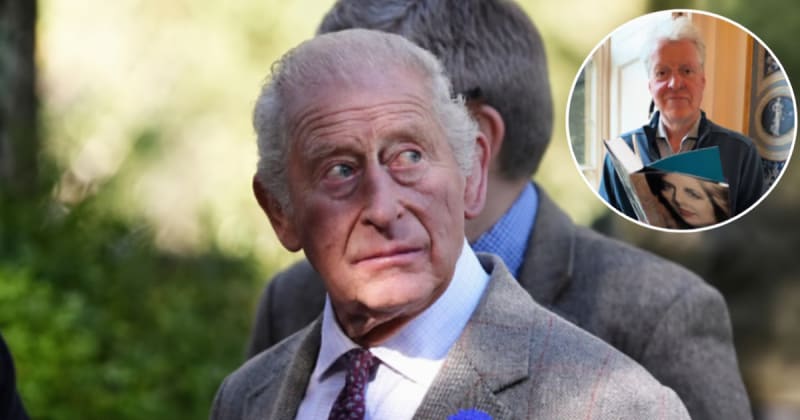
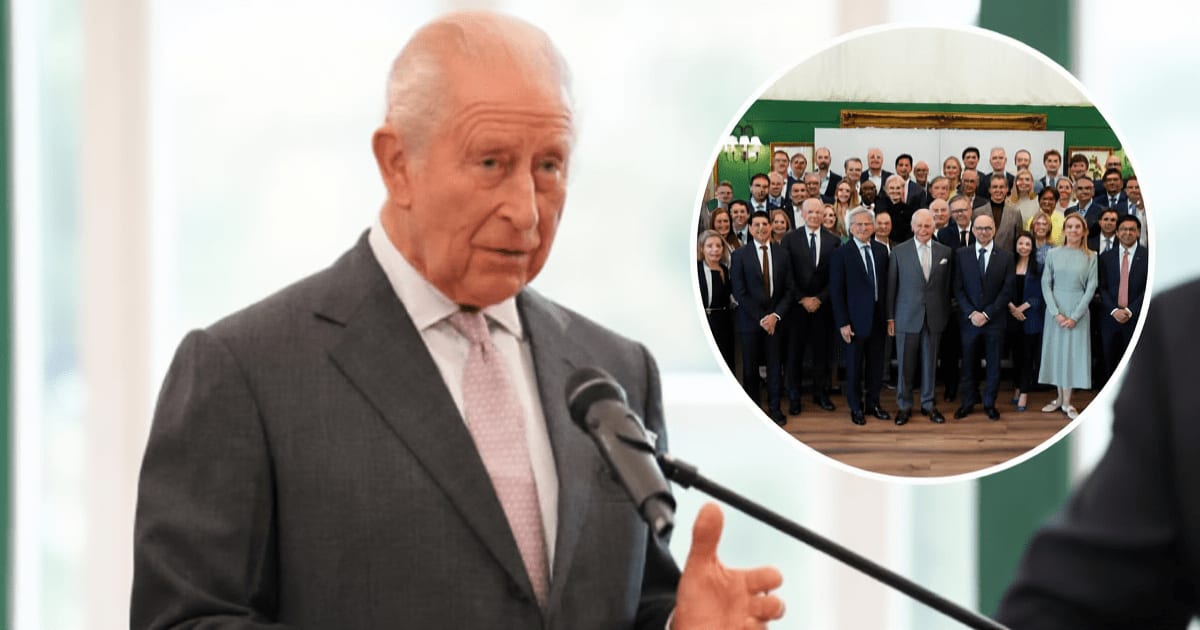
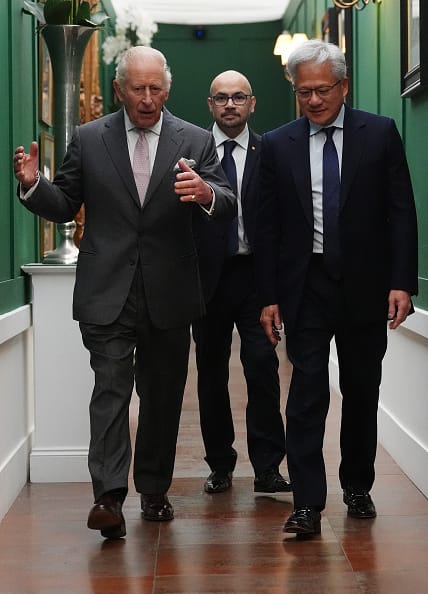
His Majesty is now turning that same attention towards one of the most powerful and controversial technologies of our time: artificial intelligence. At Dumfries House in Scotland, the King convened leading figures from the technology industry alongside government representatives and other experts to discuss how AI can be developed and deployed in ways that benefit society. Representatives from Nvidia, Google DeepMind, OpenAI and Anthropic were among those taking part, with discussions focused not just on what artificial intelligence is capable of doing, but on the principles that should guide its development.
For Charles, the subject is not as far removed from his longstanding interests as it might initially appear. For much of his public life, he has spoken about sustainability, the environment and the responsibility of one generation to those that follow. At Dumfries House, he connected those ideas with the development of AI, describing the estate as a “living laboratory” for his philosophy of Harmony - the belief that human activity should work in balance with the natural world. The question at the heart of his intervention is therefore a familiar one: how can society embrace innovation without ignoring its consequences?
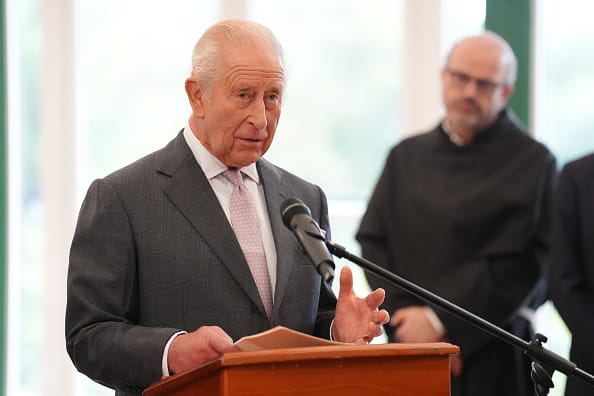
The technology is already changing workplaces and the way people find and process information. While advances in areas such as medicine and scientific research could bring significant benefits, Charles acknowledged those very possibilities while making clear that greater technological capability also brings greater responsibility. “The decisions taken at this formative time will shape the world inherited by future generations,” he told those gathered at Dumfries House.
Generative AI has made it easier to create convincing photographs, videos and recordings of events that never happened. Deepfakes and other forms of synthetic media can contribute to misinformation and fraud, while the growing sophistication of the technology can make manipulated material increasingly difficult for the public to distinguish from authentic content. There is a second problem too: as people become more aware that convincing fakes exist, genuine material can also be dismissed as artificial, potentially weakening trust in photographs, video and other forms of evidence.
The manipulation of people's images presents an especially troubling dimension. AI can be misused to alter photographs of real people or place someone's likeness into fabricated material without their knowledge or consent. Where children are concerned, the implications become even more serious. Law-enforcement and child-protection organisations have warned about the use of generative AI to create or manipulate material, demonstrating how a technology capable of extraordinary legitimate uses can also be exploited in deeply harmful ways. These examples underline why questions about consent, safeguards and responsibility cannot simply be left until the technology is fully mature.
Charles also warned about dangers on a much larger scale. Speaking at the summit, he referred to the “existential dangers” that could arise if increasingly powerful AI fell into the wrong hands, while stressing the importance of establishing safeguards. His position was not one of opposition to artificial intelligence itself; rather, his remarks reflected the tension running throughout the meeting - how to encourage potentially transformative innovation while reducing the possibility of serious harm.
There's also an environmental question, as AI depends on vast computing infrastructure with huge data centres supporting increasingly sophisticated systems that consume significant amounts of electricity and, depending on their design and location, water. For a King whose environmental campaigning stretches back decades, this creates another reason to engage with the subject. Artificial intelligence may eventually help scientists address environmental challenges, but the resources required to develop and operate it mean its own environmental impact is also part of the conversation.
As a constitutional monarch, the King does not determine Britain's AI policy, and he cannot decide how the technology should be regulated or what laws Parliament should pass. His role at Dumfries House was instead one of convening - bringing together people with the ability to shape the technology and encouraging them to consider the wider consequences of the decisions they make. It is an approach Charles has used previously on environmental issues, where royal convening power has allowed figures from business, government and other sectors to meet around a common subject.
His choice of language reflected that approach. “I really am enormously grateful for the presence in this room of many of our greatest technological minds,” King Charles said, praising the “thoughtful stewardship” demonstrated by those considering the fundamental principles that “should - and must - guide the development of Artificial Intelligence in the years ahead.” Stewardship is a particularly fitting word for a King who has spent much of his life discussing what one generation inherits and what it passes on to another.
This is also not his first encounter with the debate, as he addressed the UK's inaugural AI Safety Summit in 2023. At the conference, he described the rapid development of artificial intelligence as a profound technological moment and stressed the need for international cooperation in addressing its risks. His decision nearly three years later to convene technology leaders indicates that AI has become part of a continuing conversation for the King rather than simply the subject of a single engagement.
There's something striking about the conversation taking place at Dumfries House, an estate associated with traditional craftsmanship, heritage, sustainable farming and Charles's belief in living more closely with nature. Yet the contrast may explain precisely why artificial intelligence interests him. The technology is new, but the question behind it is one Charles has been asking for decades: how far can we progress without losing sight of what - and who - that progress is ultimately meant to serve?