King Charles to Get Eye-Watering Rise in Royal Funding Under New Sovereign Grant Formula
The monarchy's core funding is estimated to double within the next three years, reaching the $137 million mark annually by the revised Sovereign Grant.
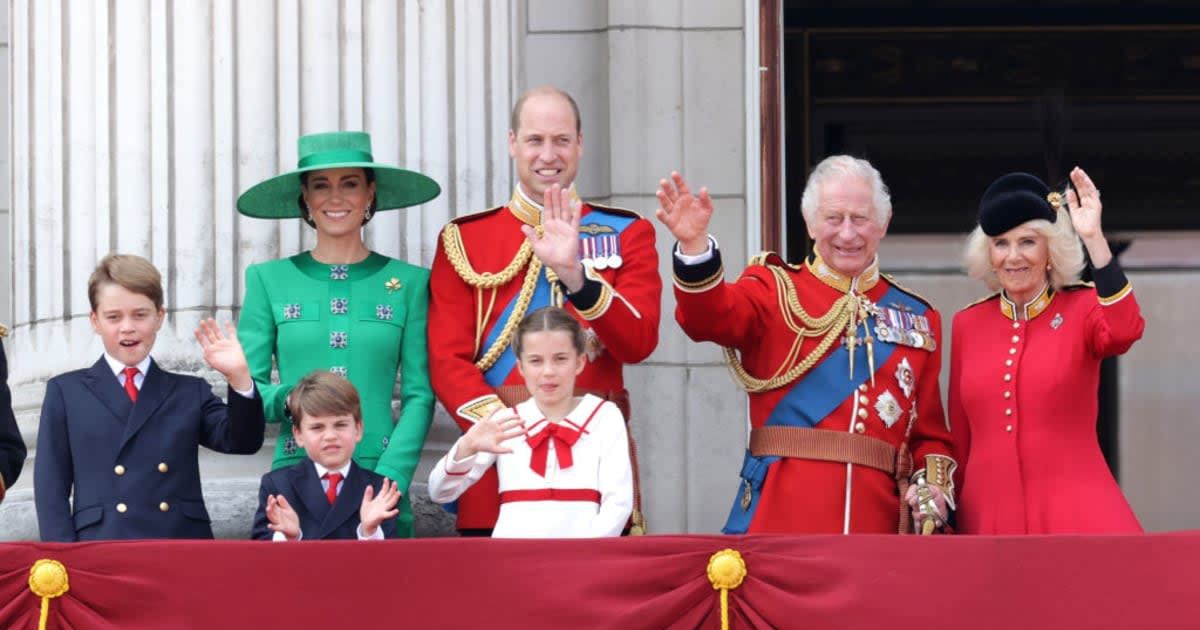


The British monarchy is set for a major change in its financial structure and how it is funded, with the Royal Household expected to see its core funding nearly double over a three-year period. Driven by a revised calculation formula for the Sovereign Grant, this core funding is estimated to jump to £99.9 million (approx. $132 million) annually by 2027–2028, while the overall total funding peaks at £137.9 million (approx. $182 million) this year. While these staggering numbers have sparked widespread attention, the reasons behind the massive increase are far more complex than they first appear.
As per the officials, the extra money is meant to cover essential work rather than personal spending, but the move is still likely to attract public debate over taxpayer-funded support for the Royal Family. Under the revised Sovereign Grant formula, the Royal Family's core funding will almost double to £99.9 million (approx. $132 million) annually by 2027–28. This marks a massive £48.1 million (~$63 million) increase from the £51.8 million (~$68 million) received in 2024–25 and a £27.8 million ($37 million) jump from the £72.1 million ($95 million) allocated for 2025–26.
As highlighted by The Independent, the new decision was approved by the Royal Trustees, made up of outgoing Prime Minister Sir Keir Starmer, Chancellor Rachel Reeves, and the King’s Keeper of the Privy Purse and Treasurer, James Chalmers. The additional funding will be used to tackle a backlog of repairs across occupied royal palaces, improve cybersecurity at royal residences, and install energy-efficient heating systems. Around $15.1 million (£11 million) has been set aside to replace aging boilers at Windsor Castle.
King’s Keeper of the Privy Purse and Treasurer, James Chalmers, stressed that the increased funding should not be seen as unlimited spending. He said, "Expenditure is governed by the same standards and disciplines as any publicly funded body, with strict value-for-money requirements, detailed planning, multi-year strategies, independent audits, and Treasury oversight." The new arrangement comes after a temporary increase to the Sovereign Grant introduced in 2017 to pay for the $505.5 million (£369 million) refurbishment of Buckingham Palace. That special funding ends in 2027, meaning the total annual grant will fall from $182 million (£138 million) in 2026-27 to a core grant of $132 million (£99.9 million) in 2027-28, even though the core funding itself is increasing significantly.
Explaining the change, Chalmers continued, "This year we are announcing that the Sovereign Grant will be reduced in 2027-28 for the first time since its inception." He also added, "In line with His Majesty’s clear wishes, it will be reduced to £100 million, a level that the Royal Trustees have determined will ensure the work of our Head of State and the wider Household can be properly and appropriately supported in the nation’s best interests." While the total overall grant will decrease as the Buckingham Palace renovation funding winds down, the annual core funding is locked in to remain near £99.9 million (approx. $132 million) for the next five years under the new formula.
The revised funding model will calculate the Sovereign Grant as 20.5 per cent of Crown Estate net profits from 2027-28, up from the current 12 per cent. The change comes as Crown Estate profits are expected to be affected by the end of offshore wind option fees. Chalmers also made it clear that the grant is not personal income for the Royal Family, explaining, "It is important to emphasize that the Sovereign Grant does not provide personal income to members of the Royal Family. It funds the work of the institution—not private lives or private wealth."
The Sovereign Grant is paid from public funds in return for the King surrendering revenue from the Crown Estate, which reported a net revenue profit of about $643 million (£487 million) in 2025–26. The Treasury said the updated formula is designed to provide "a sustainable and proportionate funding framework going forward."