How Prince William Has Used Sport to Champion His Causes – And What You Might Have Missed
EXCLUSIVE Analysis: From football to rugby, William has increasingly used sport to take his causes further.


PRINCE William’s relationship with sport has long extended beyond the royal box, with football pitches, stadiums and sporting organisations increasingly becoming places where some of his biggest causes are put into practice.
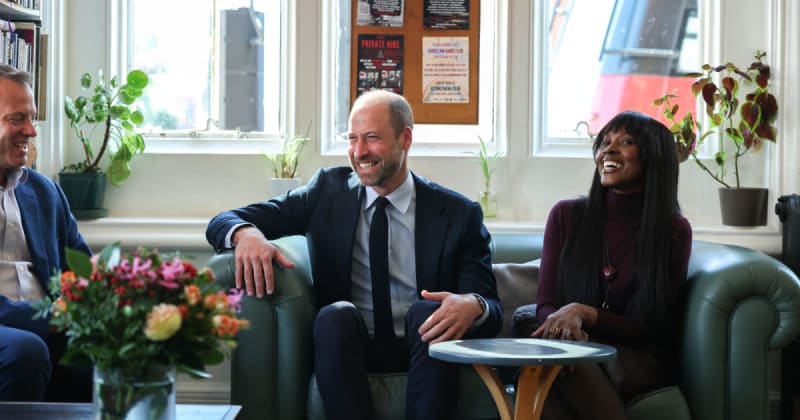
Earlier this month, the Prince of Wales brought together athletes, governing bodies and suicide-prevention experts at Everton’s Hill Dickinson Stadium to launch On Your Side, a Royal Foundation toolkit designed specifically for sport. The Football Association, Premier League, Team GB and British Cycling are among the organisations committing to use it.
It was the latest example of something that has developed throughout William’s public life: using the reach of sport to take an issue beyond the confines of a conventional royal engagement.
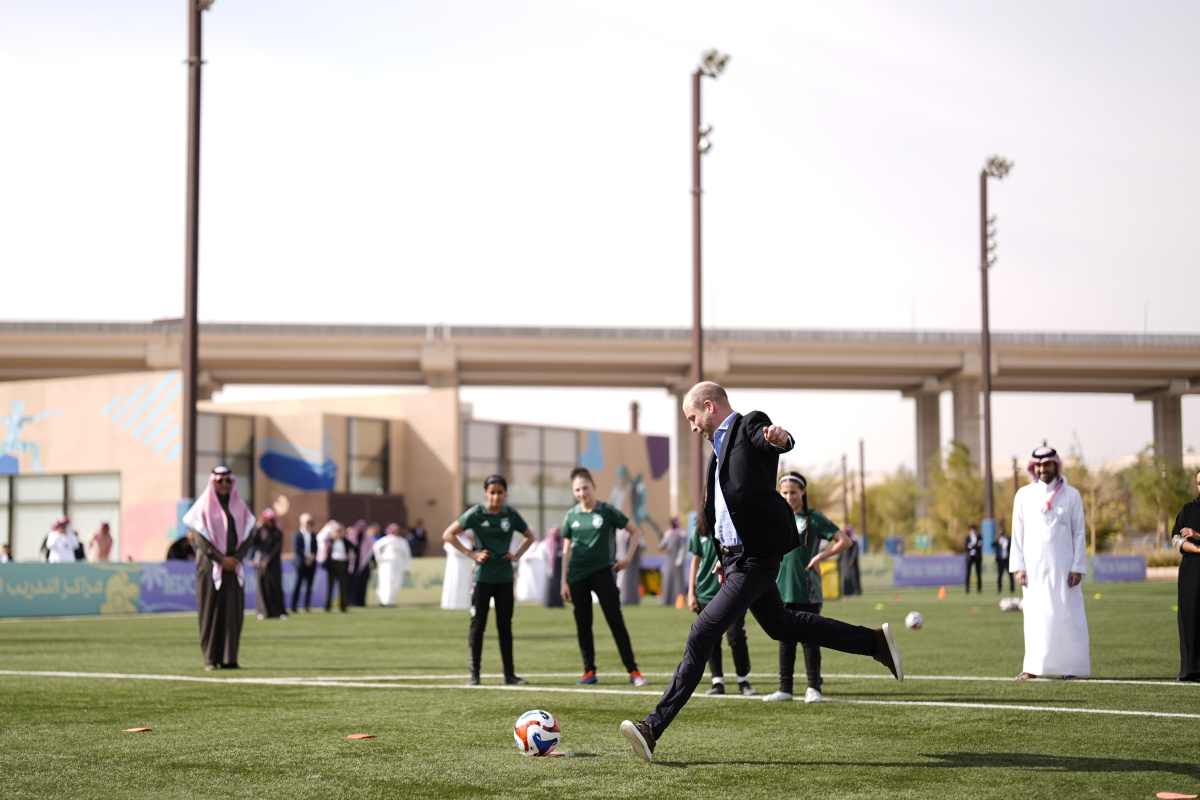
Football has provided the clearest route for the prince. William became president of the FA (Football Association) in 2006 and, following a review of royal patronages, became its patron in 2024. A lifelong Aston Villa supporter, he is regularly seen at England matches and FA Cup finals, but his relationship with the organisation has also provided a platform for work that was removed from the results on the pitch.
Mental health was an early example. Heads Together, launched with Catherine and Prince Harry, sought to change the national conversation around mental wellbeing. In 2019, William took that work directly into football when the Royal Foundation partnered with the FA for Heads Up. The campaign ran across the 2019-20 season, reaching both professional and grassroots football, and it used the national popularity of the game to encourage conversations about mental health, particularly among men.
Rather than creating a separate audience for the campaign, William was taking it to one that already existed in huge numbers. Seven years later, On Your Side took that relationship further. It is not primarily an awareness campaign: the toolkit is intended to help people throughout sport recognise warning signs, begin conversations and connect those at risk of suicide with appropriate support. William said this month that sport can reach people who might never enter a mental-health service or seek help themselves.
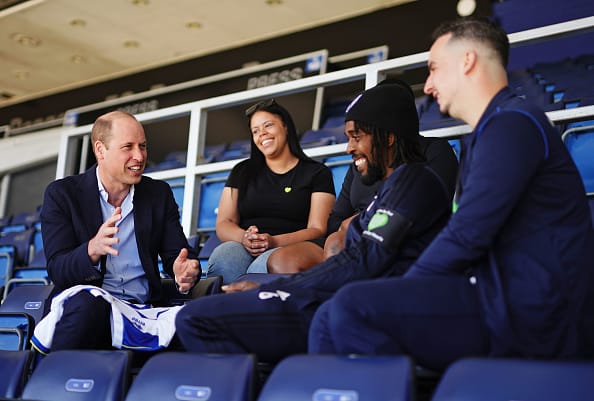
Football has also intersected with his work around communities. In 2023, William visited QPR's Loftus Road to meet survivors, bereaved relatives and residents affected by the Grenfell Tower fire. The engagement examined the role the club's community trust had played following the disaster, including mentoring, mental-health support and football matches bringing people together.
Those less prominent engagements help explain why sport has proved useful within his wider royal work. A football club can be a sporting institution, but it can also be a community network capable of reaching families and individuals who may have little connection with a palace or traditional charity.
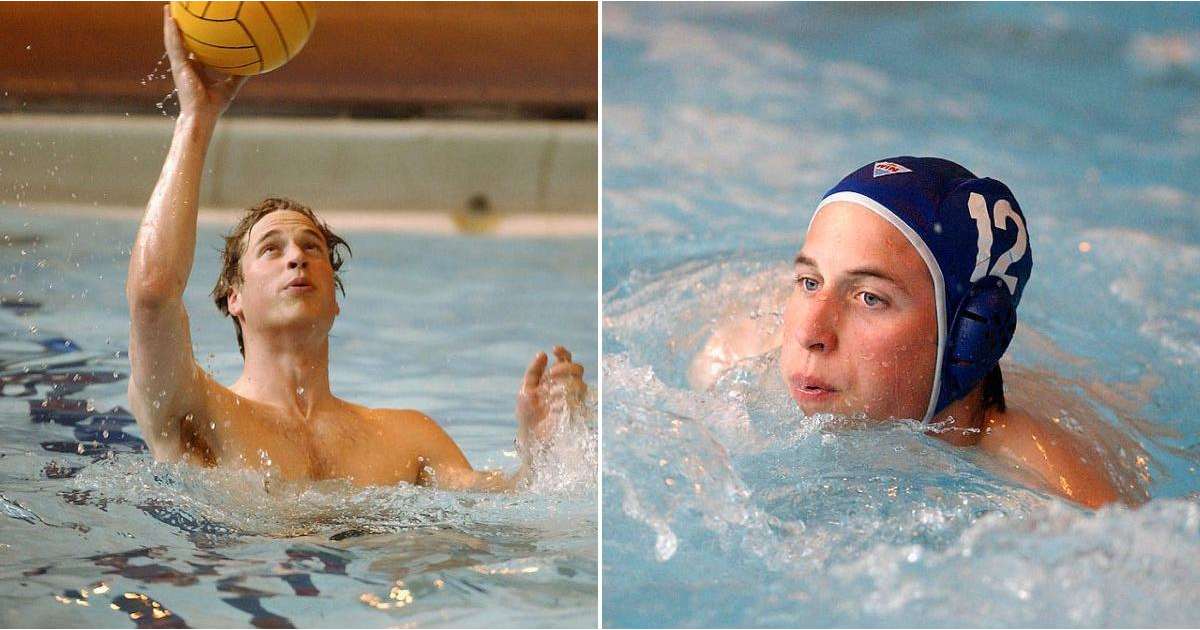
William's sporting interests extend far beyond football as he's also the patron of the Welsh Rugby Union and supports organisations including Swim England and the British Sub-Aqua Club. While studying at St Andrews, he played water polo, whilst polo on horseback has also featured throughout his adult life, including charity matches used to raise money for causes he supports.
The different sports have not all been used for identical purposes, nor does every appearance need a charitable message attached to it. William attending a football match as FA patron or supporting Wales at rugby can simply form part of his official sporting roles.
Yet the longer history shows how those roles can become useful when one of his established causes needs to reach a particular audience.
That was visible again during England's World Cup preparations this year when William visited St George's Park in May. Rather than solely concentrating on the players, he met coaches, analysts, medical teams, nutritionists, sports scientists and operational staff working behind the scenes. He thanked what he called the “team behind the team” for providing the essential foundations for which the players rely both before and during the global tournament.
There's a connection with the direction of some of William's other projects. Homewards, his five-year homelessness programme, relies heavily on bringing organisations from different sectors together rather than placing one institution at the centre. Three years after its launch, the Royal Foundation says more than 2,400 people have received early support across its six locations, with businesses, housing organisations and local services involved.
Sport offers a similar network on a different scale: governing bodies at the top, thousands of clubs and volunteers underneath them, and millions of supporters around them.
That may be why William's use of it has become more ambitious. Heads Up asked football to help change a conversation, whilst On Your Side aimed to embed practical suicide-prevention measures within sporting organisations to use as part of their everyday operations. For those who mainly encounter William's sporting interests through Aston Villa, England matches or photographs from the rugby, that quieter development can be easy to miss.
Twenty years after taking on his first senior FA role, sport has become more than an interest running alongside William's charitable work; rather, it has become central to it.